

If you’ve ever tilted a sofa headrest and had it stay put at exactly the angle you wanted, you’ve probably met a ratchet hinge without knowing the name. They’re the quiet part that makes “adjustable” actually adjustable. Here’s what they are, how they work, and how they’re different from a plain hinge — without the catalog jargon.
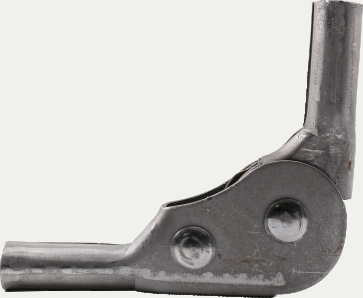
What a ratchet hinge actually is
A ratchet hinge is a hinge with detents — little notches — built into the rotation. Instead of swinging freely like a normal hinge, it clicks and holds at set positions. Push it to 30 degrees, it stays at 30. Push to 60, it holds there. Let go and it doesn’t flop back.
That “hold wherever you stop” behavior is the whole point. A regular hinge just rotates; a ratchet hinge rotates and locks at intervals.
How it works (the short version)
Inside, there’s a toothed or geared section and a spring-loaded pawl. As you move the hinge, the pawl rides over the teeth. At each detent it drops in and holds. To move again, you apply a bit of force and it pops to the next position.
So the two things that define a ratchet hinge are:
- Multiple positions — it stops at several angles, not just open/closed.
- Self-locking — it stays at the chosen angle without extra hardware.
Buyers sometimes search for a specific range like “90–180 degree ratchet hinge” or “5 position / 7 position.” Those describe what a given model offers — the number of detents and the sweep angle vary by design. Our catalog lists individual ratchet models, and the exact angle and position count get confirmed per model, not assumed from the name.
Ratchet hinge vs. a regular hinge
People mix these up, so here’s the plain difference:
| Regular hinge | Ratchet hinge | |
|---|---|---|
| Motion | Swings freely | Swings, then locks at detents |
| Holds position? | No — falls unless propped | Yes, at each set angle |
| Typical use | Doors, lids | Adjustable headrests, armrests, reclining parts |
A regular hinge is the right call when you just need two things to pivot. A ratchet hinge is what you reach for when the user needs to set an angle and have it stay — headrests being the classic case.
Why furniture buyers care
For sofa and seating factories, ratchet hinges solve a real problem: a headrest or armrest that adjusts to the person using it, and stays put. No gas strut, no extra latch, just the hinge doing the work. That’s why “adjustable headrest hinge” and “furniture ratchet hinge” come up so often in sourcing.
FAQ
What is a ratchet hinge in simple terms?
A hinge that locks at several set angles instead of swinging freely. Move it to a position, let go, it stays.
How is it different from a normal hinge?
A normal hinge just rotates. A ratchet hinge has detents that hold it at intervals, so it stays where you put it.
Do all ratchet hinges go to 180 degrees?
No — the sweep angle and number of positions depend on the model. Check the specific model’s spec; don’t assume from the product name.
Are ratchet hinges only for sofas?
Mostly furniture in our world — headrests, armrests, recliners, lazy sofas — but the same mechanism shows up in lawn and folding chairs too.
For where these actually get used, the ratchet hinge applications guide walks through headrest, armrest and lazy-sofa cases. And the Ratchet Sofa Hinges category lists our real models with photos on each product page.
[…] sure what a ratchet hinge is mechanically? The what is a ratchet hinge page covers the detent-and-lock basics. For volume or OEM, the ratchet hinge manufacturer page has […]